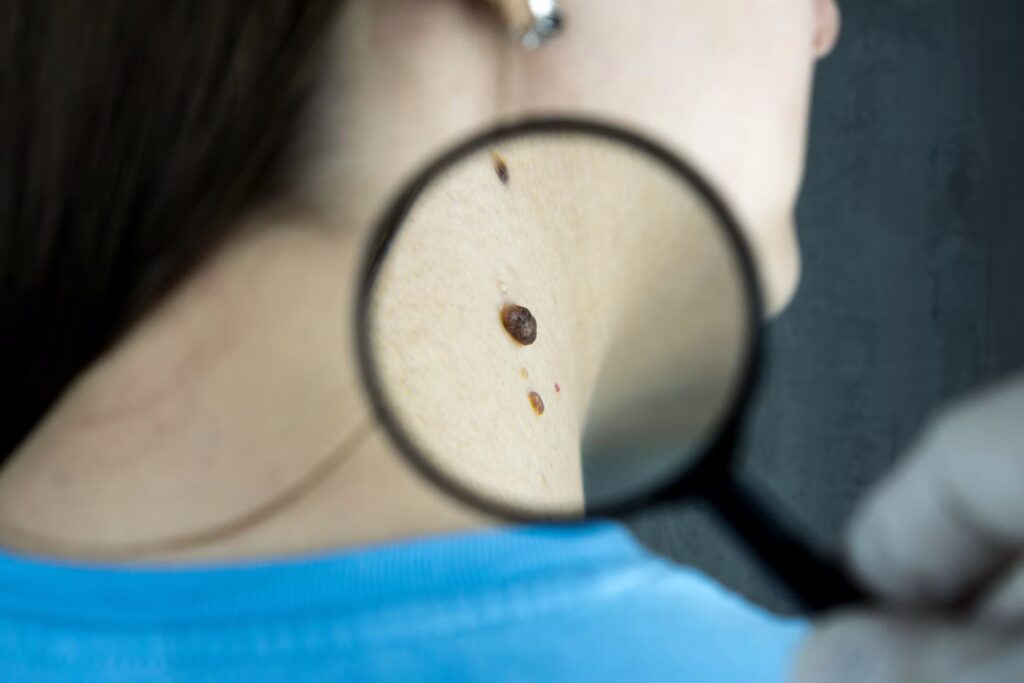
A dermatologist just showed a decade-old AI beating today’s fanciest chatbots at spotting skin cancer. Dr. Magnus Lynch of Guy’s Hospital in London published the test today.
What was the matchup?
GPT-6 Astra and Claude Fable 5.1 versus Inception v3, a 2015-era Google image model Lynch fine-tuned (extra training on a specialized dataset) using about 68,000 skin images and roughly 20 minutes on one GPU. All three looked at 200 lesions, each confirmed by biopsy.
Who won?
Not close. The little model got the right first diagnosis 62% of the time. Both chatbots got 42%. On the 30 melanomas (the deadliest kind), it caught 13, versus 8 for GPT and 11 for Claude. GPT labeled 14 of the 30 melanomas as a different, less dangerous cancer.
Wait, any good news for the chatbots?
They’re cautious. Shown 100 more melanomas and asked if a patient should see a doctor, both said yes for 98–99 of them. Problem is, they said that for most harmless spots too, which is the “WebMD says you’re dying” experience, now with a subscription fee.
The catch?
Lynch flags it himself: small sample, each chatbot case run once, and these were tough biopsy cases. The chatbots may even have seen this public dataset in training, which would have helped them.
Why it matters
Bigger isn’t always better. For narrow, high-stakes jobs, a small specialist model can beat a giant generalist. If you ask us, keep using chatbots to explain your diagnosis, not to make it.