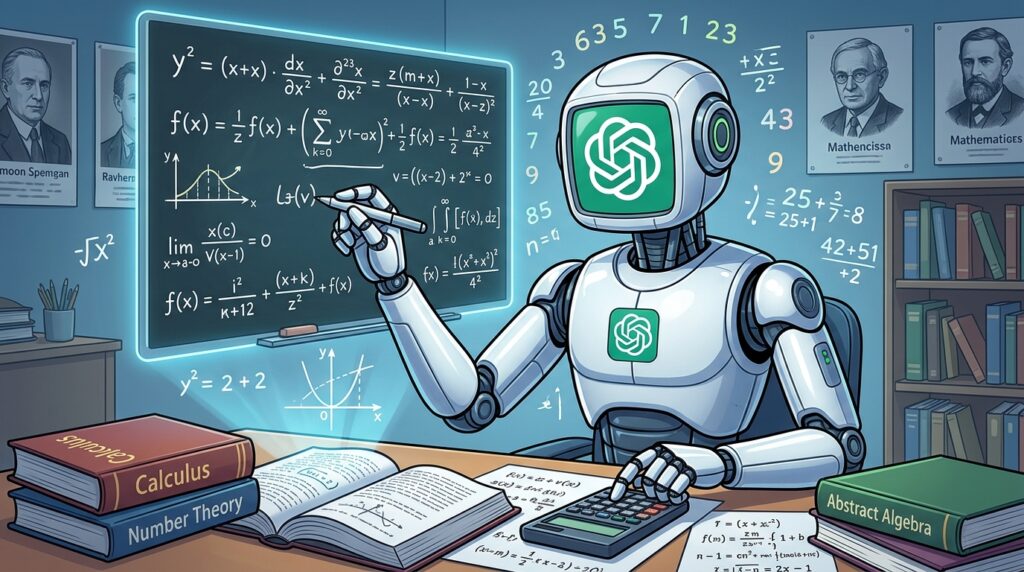
This week, OpenAI dropped 722 math manuscripts produced by an unreleased internal model into a public GitHub repo. That’s a stack of claimed solutions to previously open math problems, and mathematicians are still processing it.
How many results, exactly?
Depends who’s counting. The 722 manuscripts are grouped into 372 “families” of related results. Other coverage leads with the 372 figure. Either way, it’s a lot of homework. OpenAI says the model was given about 4,000 problems, and the average result took roughly three hours of thinking time. Sam Altman called it a “new era of discovery.”
Okay, but are the proofs right?
Some are formally verified in Lean (a programming language that checks proofs step by step, like a spellchecker for logic), but not all. OpenAI’s own README warns that some unformalized results could have issues. OpenAI says nearly all results came from a single prompt to one agent, though “some” took multiple attempts. OpenAI didn’t publish the prompts or per-problem compute times.
Why are mathematicians side-eyeing this?
An independent advisory group at the Institute for Advanced Study published guidelines on September 29 asking labs to share the model name, prompts, compute and cost for each result, plus a list of failed attempts. OpenAI’s release doesn’t do all of that. OpenAI says it consulted the group and will fund workshops on the results. The headline number is staggering, but “here are 722 papers, trust us on the process” isn’t how science usually works. The real test is the next six months of humans checking the work.